
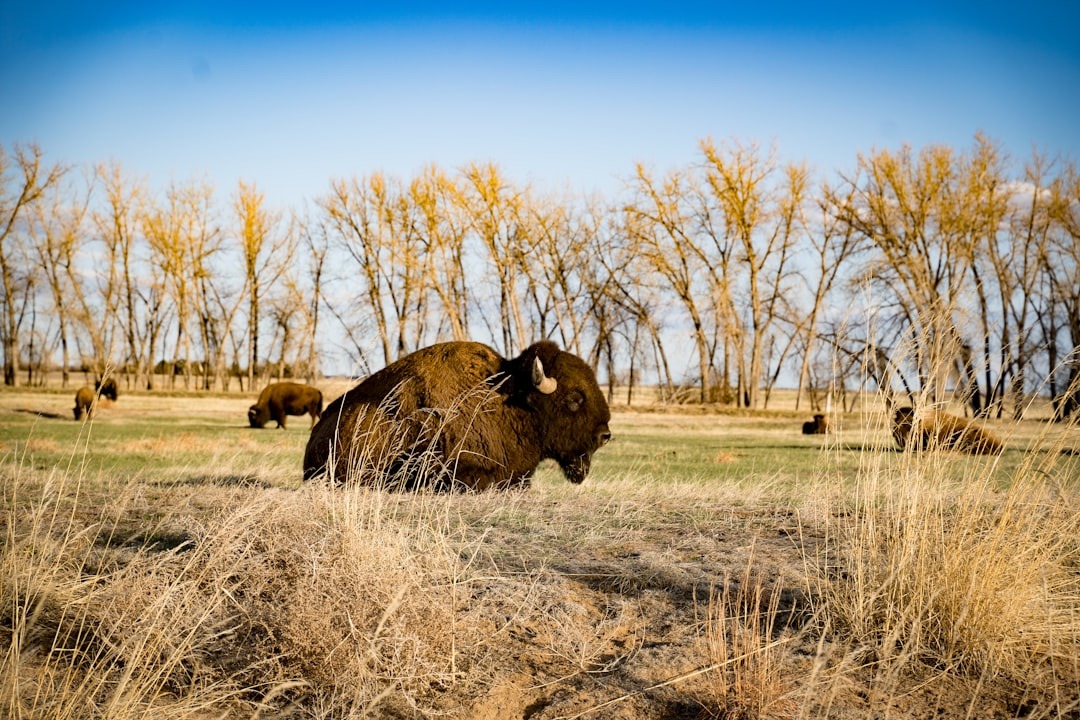
A European bison roaming the Kentish countryside of the UK is a striking symbol of
rewilding. It is there to do a job that goes beyond grazing: browsing, trampling and
disturbing vegetation in ways that help restore biodiversity and tackle climate
change. But the bison may also have another role. Could the same animals that help
restore ecosystems also contribute to the economic sustainability of the landscapes
they inhabit?
This is not a new idea. Across Europe, rewilding projects are already experimenting
with ways to generate income from wildlife and the landscapes they create. In the
UK, the Knepp project has developed wildlife safaris, accommodation and food
businesses alongside its rewilding programme, while other projects such as Wilder
Blean are using wildlife tourism to connect people with recovering landscapes.
These examples demonstrate that rewilding can generate economic value. The more
difficult question is whether we can build on these individual successes to create
genuinely sustainable economic models for rewilding at a landscape scale.
Large free-roaming herbivores are often central to restoring natural ecological
processes. Cattle, horses, bison and deer can shape vegetation and create a mosaic
of habitats through grazing, browsing, trampling and disturbance. Yet these animals
also come with costs: land, monitoring, veterinary care and, where populations
exceed what the landscape can support, population management or removal.
These costs also expose an awkward regulatory issue. Despite being managed for
ecological restoration, rewilded herbivores can be subject to requirements designed
primarily around livestock production, including identification, movement controls and
disease surveillance.
This all raises a wider question: if these animals are delivering ecological, social and
economic benefits simultaneously, can they pay their way in the long term?
The opportunity may lie not in finding a single way to make rewilding profitable, but in
stacking different forms of value.
Food is one example. Where animals need to be removed as part of ecological
population management, could their meat enter local food systems rather than
becoming simply a cost of conservation? Knepp is already demonstrating one
version of this approach. Other products, such as hides, could potentially form part of
the same model.
Tourism is another. Large herbivores are charismatic animals, and people will travel
to experience wildlife in more natural landscapes. Safaris, accommodation, guided
experiences and associated local businesses can create income while also building
public support for rewilding.
Other forms of value may be less visible but equally important: education, research,
nature-based recreation, carbon and biodiversity markets, and potentially regulated
hunting where appropriate and where it provides demonstrable ecological benefits.
None of these needs to be the primary purpose of a rewilding project. The point is
that a landscape could generate multiple economic returns from the same ecological
restoration.
This matters because many rewilding projects remain dependent on grants,
philanthropy or the financial resources of landowners. Those sources can be vital,
but they may not provide a sufficiently broad foundation for rewilding to expand
across much larger areas. A more diverse economic model could make projects
more resilient while allowing local communities to benefit directly from the return of
wildness.
There is an obvious danger. Economic value can begin to dictate ecological
outcomes. Tourism could encourage unnaturally high densities of charismatic
animals; demand for meat could turn ecological management into production;
hunting could become an objective rather than a management tool. Rewilding risks
becoming livestock farming with better marketing if commercial incentives take
precedence over natural processes.
The challenge, therefore, is not simply to monetise rewilding. It is to develop
economic systems in which different sources of value reinforce the ecological
purpose of the landscape.
We already have examples showing that individual pieces of this model can work.
Perhaps the next step is to ask whether they can be combined.
The future of rewilding may not depend on choosing between ecological restoration
and economic productivity. Instead, it could lie in creating multifunctional landscapes
where wildlife generates several forms of value at once — restoring ecosystems,
supporting local economies, providing food and experiences, and reconnecting
people with nature.
If rewilding is to become a viable land-use model at scale, perhaps the question is no
longer whether wildlife can pay its way, but whether we can build an economy
around wildlife that allows it to remain wild.
By Max Winpenny