
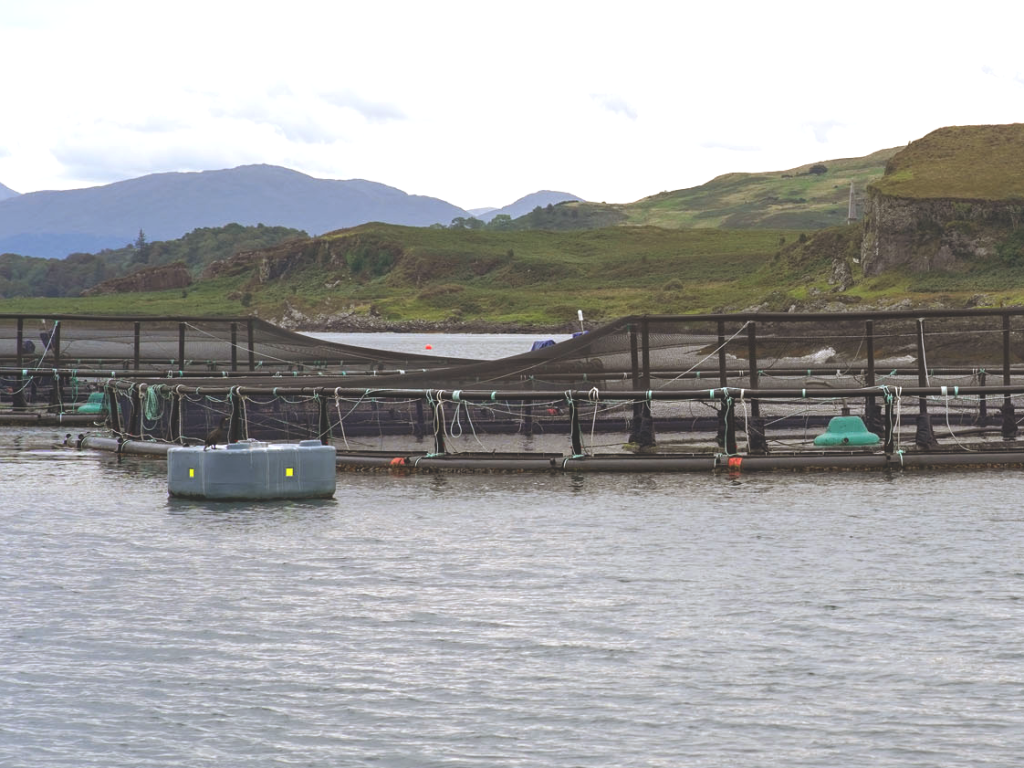
Recent stories in The Telegraph and the Daily Mail quote the Scotland Director of WildFish on the impacts of salmon farming on wild fish:
“This is just another symptom of a woefully unregulated industry that is polluting our seas and lochs with virtual impunity. Artificially fattening wild trout on industrial salmon feed can dramatically distort their natural distribution and role as predators within a loch.”
Labelled “Franken‑trout” in these stories, these fish are wild trout feeding on uneaten pellets from salmon cages. This is a very different dynamic from terrestrial farming. On land, crops replace wild vegetation and livestock compete with wild herbivores. In Scottish lochs, however, the concentrated feed used for farmed salmon is artificially increasing the biomass of wild fish.
WildFish is right to highlight this as a negative impact of salmon farming. As a conservation organisation focused on protecting wild salmon and their habitats, they campaign for transparency, accountability, and for removing farmed salmon from menus and shops.
That is all fair. But if campaigning to protect wild fish is the goal, it is worth asking whether Scotland could support sustainable harvesting of wild fish as an alternative to farmed salmon. The demand for salmon is enormous: Salmon Scotland recently reported that more than 81,000 tonnes of salmon were sold in the 12 months to April, with a market value of £1.6 billion. Virtually none of this is wild‑harvested.
If the environmental impacts of salmon farming cannot be adequately mitigated – as WildFish maintains – then the question becomes: can any of this demand be met through wild fisheries?
Wild salmon, unfortunately, is not a candidate. The UK has no commercial wild salmon fishery, and stocks are in poor conservation status. The artificially fattened trout around salmon farms cannot be considered a wild option either: they are legally protected game fish, unsafe to harvest near cages, and their growth is a symptom of pollution rather than a sustainable resource.
However, the UK does have genuine wild alternatives. Strong candidates include:
- Cornish sardines
- Scottish mackerel
- Scottish herring
These species are wild‑caught, sustainably managed, nutritionally comparable to salmon, and already present in UK markets. They represent a credible wild alternative for consumers seeking to avoid farmed salmon.
The solution – if there is one – lies in mitigating the environmental impacts of salmon farming, while promoting the sustainable and legal harvesting and marketing of wild species such as sardines, mackerel, and herring. In other words: improve aquaculture practices, and strengthen sustainable wild fisheries.
By Francis Vorhies