
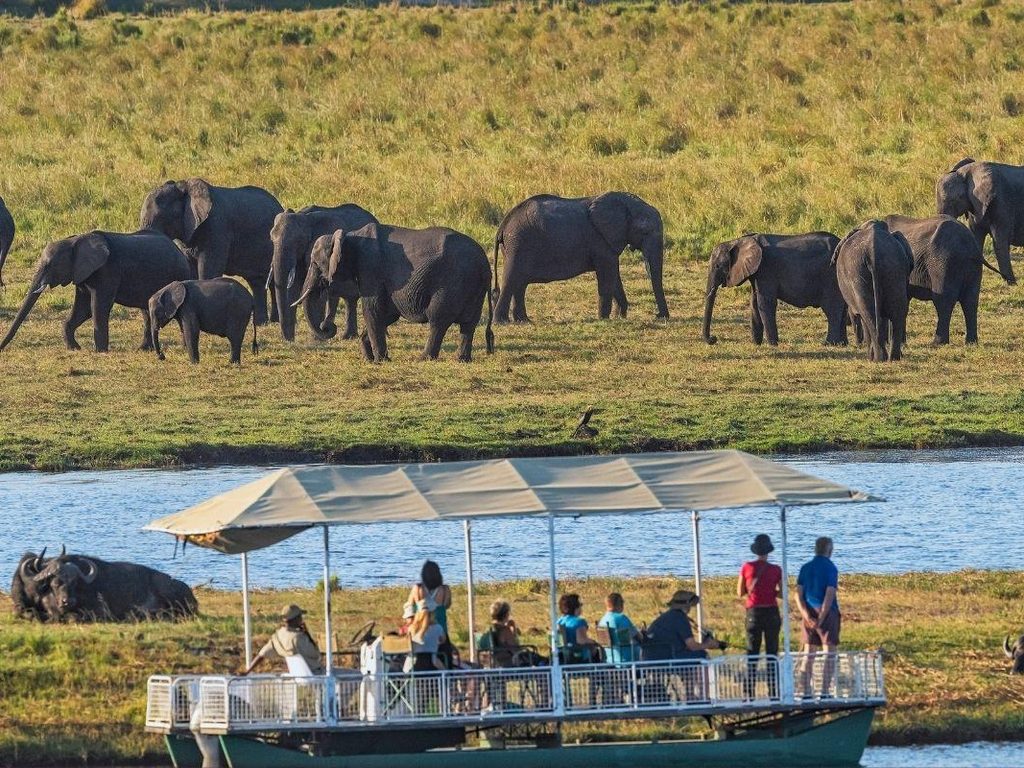
Originally posted here. This article explores the nexus between trade policy in the Southern African Development Community (SADC) and the wildlife economy.
The 46th Ordinary Summit of SADC Heads of State and Government, held in Durban on 17 August 2026, did not mention wildlife, conservation, or sustainable use by name once. Its theme of industrialisation through infrastructure, agriculture, and critical minerals was framed around mining and manufacturing value chains. Yet decisions taken (or avoided) at Durban carry real consequences, positive and negative, for the development of the SADC wildlife economy – an economy that depends heavily on cross-border wildlife tourism, transfrontier conservation areas, and natural-resource governance. Reading the outcomes against tralac’s structural analysis and ISS Africa’s critique of the summit points to a mixed picture: some enabling groundwork, alongside several inhibiting gaps.
A reading of the 46th SADC Summit communiqué, a tralac trade brief on the Summit, and ISS Africa’s post-summit assessment
What the Summit enables for the wildlife economy
The Tourism UNIVISA. The single most concrete outcome for the wildlife economy was the Summit’s approval of the Agreement Establishing the SADC Tourism UNIVISA, with a call for member states to sign it. A common regional visa directly addresses what has long been described as the “direct tax” that visas impose on cross-border activity. For wildlife tourism specifically, e.g., multi-country safari circuits through the Kavango-Zambezi Transfrontier Conservation Area, visa friction has long been a structural drag on visitor numbers and investment. If ratified and implemented, the UNIVISA is a genuine, tangible enabler for the region’s wildlife economy.
The NTB and trade-facilitation agenda. Although the Summit’s NTB (non-tariff barrier) language was aimed at agricultural trade, the elimination of NTBs is at the core of regional industrial policy. Border delays, documentation burdens, and misaligned technical standards raise transaction costs for any cross-border value chain. This includes NTBs facing wildlife-based value chains such as permits, veterinary certification, transport of legally traded wildlife products, and tourism logistics. To the extent SADC follows through on its NTB commitments, the wildlife economy will benefit, even though it was never named as a target sector.
A broader definition of “industry.” A potential breakthrough is treating industrialisation as an economy-wide construct. In terms of the Summit, this would encompass mining and agriculture as much as manufacturing. That framing, if it takes hold, creates conceptual room for conservation-linked services and sustainable-use products to be recognised as legitimate economic outputs rather than sitting outside a narrower view of industrialisation.
What the Summit leaves unaddressed
No wildlife-specific commitments at all. The communiqué’s 38 points cover peace and security, migration, disease control (Ebola, foot-and-mouth), gender, youth, critical minerals, and infrastructure, but nothing on wildlife use and trade, CITES positioning, or transfrontier conservation financing. For a region where wildlife tourism is a major foreign-exchange earner and land-use driver, its total absence from the Summit’s language suggests it remains institutionally siloed from the region’s trade agenda.
Consensus-driven vagueness. ISS Africa’s assessment argues that SADC’s summit outcomes reflect a “lowest common denominator” institutional culture. Nothing is presented as a binary choice or an urgent challenge, and no member state is singled out. Applied to the wildlife economy, this matters because the hardest issues such as divergent national positions on ivory and rhino horn trade, uneven CITES engagement, and the tension between conservation and mining/agricultural expansion into wildlife landscapes, are exactly the kind of contested hard questions that a consensus-first body tends to avoid rather than resolve.
Migration tension without resolution. The Summit received an update on migration governance and called for further dialogue but produced no binding framework. tralac’s brief argues that trade and services liberalisation cannot function in a “legal vacuum” separate from migration policy. This point has direct relevance to a labour- and community-dependent sector like conservation tourism, where cross-border staff mobility, community-based natural resource management schemes, and anti-poaching cooperation all depend on functional, rights-respecting mobility arrangements that remain unresolved.
Minerals over conservation land-use trade-offs. ISS Africa notes that SADC’s critical minerals push is drawing serious external interest from the US, EU, India, and Gulf investors, with the Summit encouraging member states to “leverage emerging opportunities.” Left unaddressed is how this accelerating minerals agenda intersects with land use in wildlife-rich landscapes across the region.
The takeaway for southern Africa’s wildlife economy
The 2026 Durban Summit advanced tools – notably the UNIVISA, renewed NTB commitments, and potentially a broader industrial framing – that could directly benefit the wildlife economy if implemented. But it did so without recognition of wildlife as one of the region’s strategic assets. In so doing, key issues facing the wildlife economy, including regional positions on wildlife trade and transboundary financing, as well as pressures for expanding agriculture and mining, remain off the agenda. On the evidence of this Summit, southern Africa’s wildlife economy is being helped along the edges of a much larger trade and infrastructure agenda, but it remains an unseen elephant in the room.
By Francis Vorhies